
Hide It From Yourself
A leak isn’t an accident. It’s a genre.

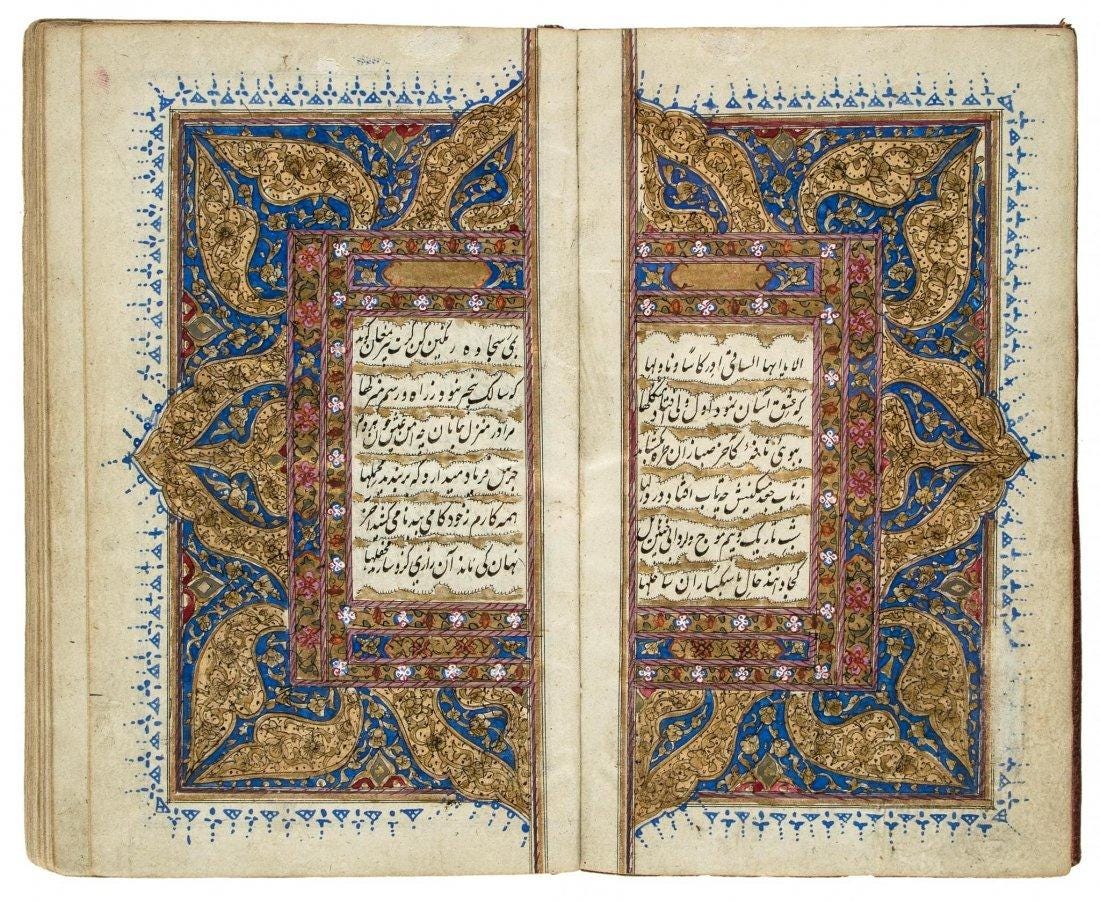
There is a way of reading that assumes the surface is a decoy. The Hurufis believed the human face concealed scripture — that if you looked long enough at a forehead, a cheekbone, the arrangement of a beard, you would find letters arranged by God, and that the letters, read correctly, would spell out the truth the world otherwise kept hidden from ordinary sight. Most people looked at a face and saw a face. The initiated looked at a face and saw a text.
Orhan Pamuk built a whole novel on this instinct. In The Black Book, a man searches Istanbul for his missing wife by reading his brother-in-law’s old newspaper columns as if they were coded messages meant only for him — until the search collapses into impersonation, and he can no longer tell his own voice from the one he’s been decoding. Not because intelligence agencies encode scripture in press releases. Because the surface sentence is rarely the whole sentence, and there is often a second reading underneath the first — available to whoever already knows an institution’s history well enough to notice when it’s talking to them in code.
Here is the face. “The C.I.A. has secretly established a Cuba task force.” Read it the ordinary way and you get a sentence about spycraft — case officers, cyberoperations, an old rivalry with an island ninety miles from Florida. Read it the Hurufi way and the word doing the work isn’t task force or even Cuba. It’s secretly. That’s the letter arranged wrong on purpose. One way to read a secret that arrives with staffing details, mandate scope, a named historical predecessor, and quotes from officials “briefed on the action”: it isn’t a secret that escaped.
It’s a secret that was released — dressed in the vocabulary of concealment so that its audience feels something serious is happening, without anyone in government having to say so on the record.
Governments have used controlled disclosure for as long as there’s been a press to communicate through. The background briefing, the unnamed official, the slow-drip confirmation after a story breaks — secrecy and disclosure are not always opposites. Sometimes disclosure is one of secrecy’s instruments. The institution telling you about Cuba has its own long fluency in this — a documented habit, going back to Cold War-era relationships between American intelligence and the press, of knowing which sentence, given to which reporter, at which moment, will read as disclosure and function as instruction.
The Scripture
If the surface sentence was the decoy, here’s what’s underneath it, spelled out plainly enough that you don’t need special training to read it, only patience: officers assigned to the task force will “scour through the newly available intelligence for inside information about the activities of Cuba’s leaders and other members of the political elite, in particular tracking shadowy money flows and business dealings.” Not troop movements. Not weapons stockpiles. Bank records. Business dealings.
The private arithmetic of a ruling class.
The goal was never announced as defend America or even contain a threat. It was announced, in the article’s own words, as “creating fissures among the Cuban political elite.” A fissure is not a wound you inflict on an enemy from outside.
It’s a crack you find already forming, and widen. You don’t need an invading force for that. You need a ledger, patience, and the right hard-liner made suddenly and publicly poor while the right pragmatist is quietly made rich enough to be reasonable.
This is not new theology. It is the same rite the agency performed on Russia’s elite — this piece says so itself, almost proudly, “reprising a playbook.” One increasingly common instrument for regime change isn’t the amphibious landing — it’s the audit: a ledger instead of a beachhead, waiting for the men at the top to do the work of eating each other. Read this way — and it’s only one way to read it — democracy isn’t the thing being delivered to Cuba. It’s the word painted over the door of an older room, where you decide in advance which of a country’s own elites deserve to survive the audit, and call whoever’s left standing “practical.”
The Ledger, Live
None of this needs to stay theoretical. The audit is already running, and it has a paper trail.
In May, Secretary of State Marco Rubio proposed a $100 million aid package for Cuba. By July, the first shipment — food and hygiene kits for up to 700 families — was flying out of Miami, delivered not to the Cuban government but by the Catholic Church, explicitly to close off “any opportunity for regime diversion or theft” (Le Monde with AFP, 2026a). Read plainly, that’s generosity with a condition attached: the same government that has spent months tightening the oil blockade deepening the energy crisis behind the blackouts is now the one choosing how, and through whom, relief arrives — bypassing Havana’s own capacity to distribute it, or to be seen distributing it. Different desks wrote the sanctions and the aid package. One hand still controls the tap and the towel.
The crisis and the cure share an author.
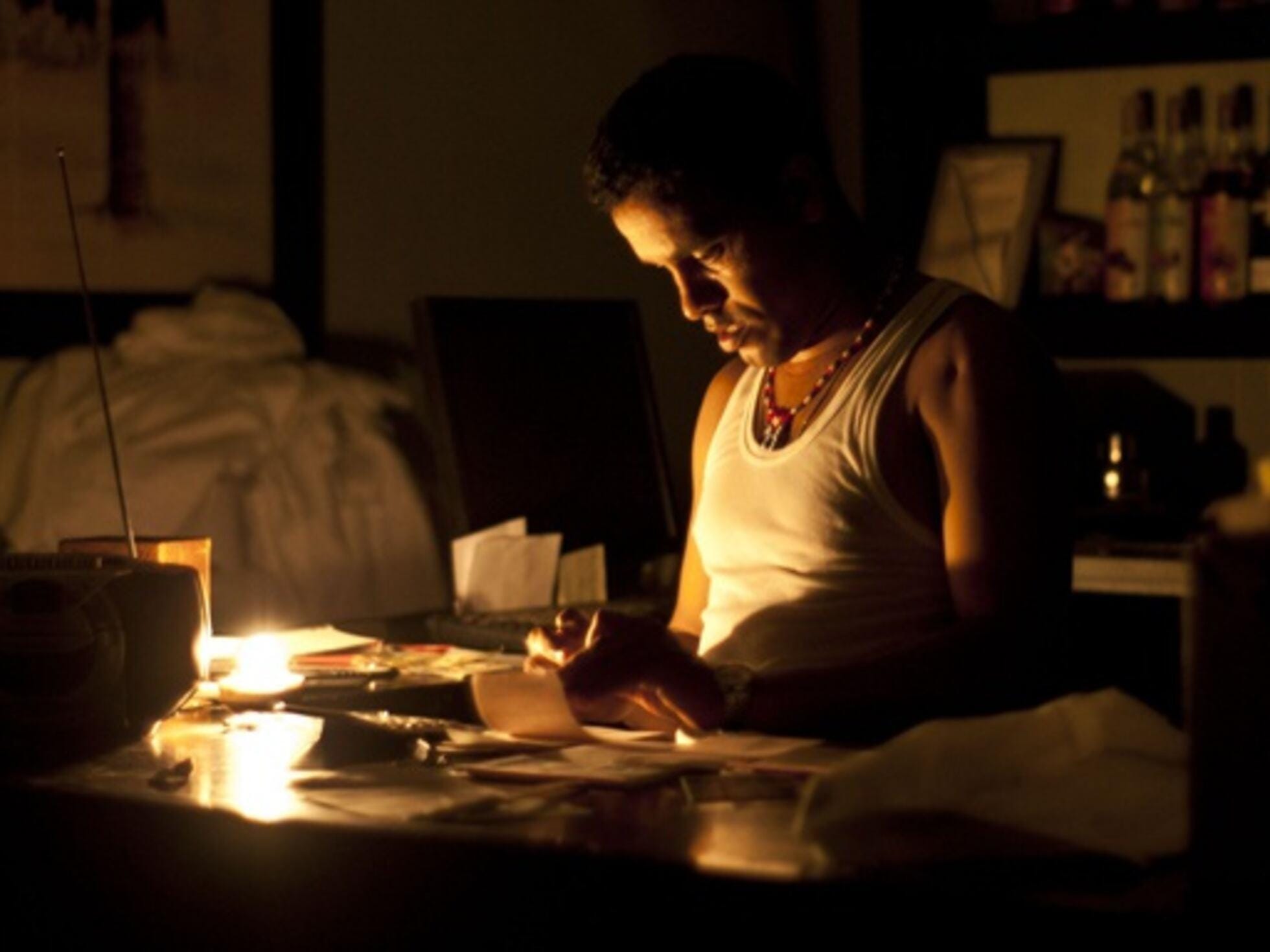
The blockade itself is not rhetorical. Cuba’s electricity grid has suffered repeated total collapses — nationwide blackouts on back-to-back days in early August, the state utility citing a 2,380-megawatt shortfall against demand it can only meet at 27 percent (Le Monde with AFP, 2026c). UN human rights experts have warned the sanctions regime risks tipping the island into “full-blown crisis,” with the burden falling hardest on women, children, and the elderly (Le Monde with AFP, 2026d). This is what an “audit” costs when it’s actually run: not a metaphor, a blackout.
And the ledger has named entries. Raúl Castro — brother of Fidel, a power broker on the island for six decades — has been indicted by the United States over the downing of two civilian aircraft three decades ago (Le Monde with AFP, 2026c). In August, Washington sanctioned Cuba’s armed forces minister, seven other officials, and five state-owned entities, citing a State Department report with a title that reads less like an intelligence assessment than an argument prepared in advance: “Cuba: The Capital of 21st Century Communism” (Le Monde with AFP, 2026d).
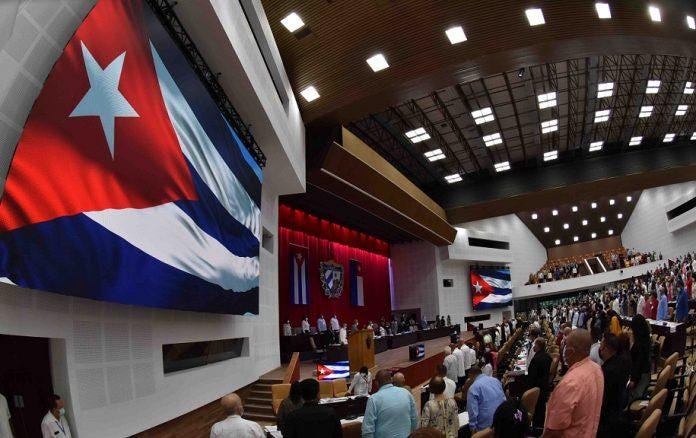
Cuba, for its part, is doing exactly what a government under this kind of pressure does: bending without confessing. In July, Havana decreed the liberalization of pharmacies, gas stations, waste collection, and electric vehicle imports to private firms — real cracks in six decades of state control — while its National Assembly met the same week to denounce imperialism and chant “socialism or death!” (Le Monde with AFP, 2026b). The government kept its grip on education, media, telecommunications, and defense — the sectors that determine who gets to narrate the story, not just who collects the trash.
Reform and defiance in the same breath, which is exactly what a fissure looks like from the inside: not a government collapsing, a government negotiating with itself, out loud, in public, because it no longer has the fuel to do it quietly.
The face was never the country
Here is where the Hurufi reading turns on itself, the way it’s supposed to: you keep staring at the forehead looking for the sentence about Cuba, and eventually you notice the sentence was never about Cuba at all.
The same article that treats Havana as a “hardest target,” that elevates it to Priority 1 alongside China, Iran, and Russia — nations that can genuinely darken a skyline or crash a currency from range — never once has to argue that Cuba can do either. It doesn’t need to. Maybe the tier is measuring capability. Or maybe it’s measuring appetite. An island with a collapsing economy, an aging military, and no meaningful power to project past its own coastline sitting in that company invites the second reading at least as much as the first: that Priority 1 can be the word you reach for when you want resources released without first proving a threat that isn’t there.
Read that way, the whole text rearranges. It was never a document about what Cuba might do to America. It was a document about what America has already decided to do to Cuba, wearing the grammar of self-defense because that is the only grammar a democracy’s own public will fund.
The face you were straining to read was a mirror the entire time, and the scripture on it was never Havana’s. It was Washington’s.
Tags: Thermodynamics of Power, Cuba, U.S. Foreign Policy, Secrecy and Disclosure, Hurufism
Share || Subscribe
A reading like this isn't meant to stay with one person. Share it.
Subscribe for the next one.
Sources
Entous, A. (2026, August 5). C.I.A. sets up secret Cuba task force as Trump pressures Havana. The New York Times.
Le Monde with AFP. (2026a, July 21). United States sends first aid to Cuba as part of $100 million commitment. Le Monde.
Le Monde with AFP. (2026b, July 29). Cuba, hit by crisis, opens pharmacies, gas stations to private firms. Le Monde.
Le Monde with AFP. (2026c, August 3). Cuba’s state energy firm reports new nationwide blackout. Le Monde.
Le Monde with AFP. (2026d, August 6). US sanctions Cuban armed forces minister, military procurement network. Le Monde.
"Havana decreed the liberalization of pharmacies, gas stations, waste collection, and electric vehicle imports to private firms " Does this mean private companies, in - any country - say the US - may buy in? Personally I think someone who has a soft spot for hotels wants new oceanfront beach properties that attract tourists, maybe even, hotel-casinos? Their beaches are as gorgeous as Cancun's. And as close to the 'heartland,' too. Also the Sec of state has an axe to grind and I'm sure an empty bank acct to fill with those gorgeous stretches of open land. I almost wrote about Cuba, 1/2 way through, but more from tourism aspect of old. Many of our bookshop customers would go over. But then it is just too too sadly depressing. Thanks though for the decoder. What a bunch of bs, all of it.