
Picking a Lane (Pseudopodically)
Part 18 in a conversation between Brad Yonaka, Matthew David Nelson, and Dave Paquiot about travel and literature


Below is a link to the previous post by Brad Yonaka:

Brad’s question to me:
Where do you feel most comfortable anchoring your presence as an author of a story? Is it more important for you to accurately describe something as an observer, or do you want to be a large part of what is being told? Having read some of your work on Substack, I suspect your answer has some nuance, because you write on a wide variety of subjects.
Let’s start with the honest answer: I don’t entirely know what I am as a writer, and I’ve stopped trying to settle the question.
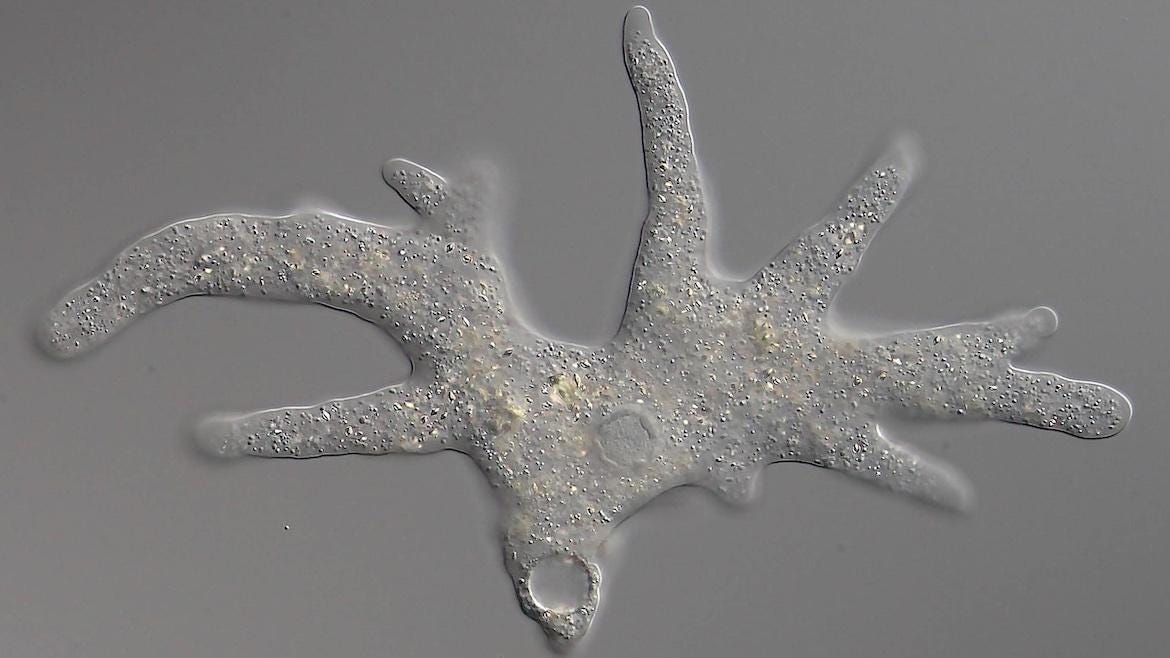
Sometimes I stand at a remove — observing, letting the scene or the system do the work, trying to disappear into the quality of attention I’m bringing. Other times, though, my personality reaches out far beyond me — like some weird pseudopod — and sets the direction of travel for a little while before retracting.
(Causality, unbeknownst to me at the time, turned out to be a lens at which to preview everything around us — or so I once thought.) When an amoeba extends its pseudopod you see this long dramatic reach, but behind the cell membrane there is all sorts of movement, three-dimensionally, all at once. A lot of what I observe in the world is like that. The direction things move, however sharp it appears, contains — Whitman-like — a multitude of smaller directions and velocities that only resolve into a singular vector at sufficient distance.
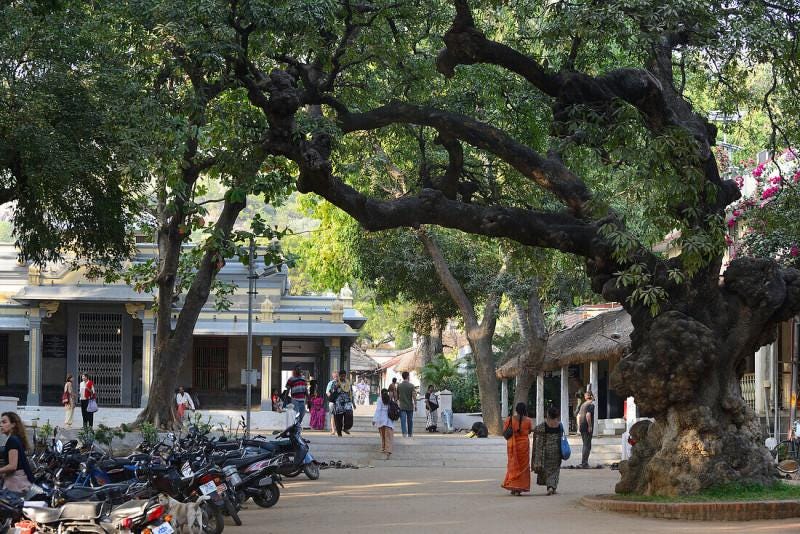
I remember being days away from my 16th birthday, sitting in an ashram in South India in the weeks before the monsoon broke. The ashram held a silence dense as the humidity, absorbing the images and sounds of rickshaws and cows and arguing vendors outside the gates. It was, I think now, a kind of womb — and what mattered most during that eastbound gestation was the promise of whoever I would be when the plane delivered me back into the embrace of New York City. The heat was serious enough to match something internal, a curiosity that hadn’t yet found its object, an urgency to figure out where in this world there was room for me. The food was a negotiation. And I was aware, simultaneously, of two things: my own specific self — the jokes I was telling my travel companion, the sarcasm that is just how my personality deals with being somewhere strange and uncomfortable (and also embarrassing gastrointestinal issues) — and something much less personal.
I was one in a long stream of people from the West who travel East looking for meaning. I knew it even then. I was both an individual and a type, simultaneously.
What strikes me now is that a baby enters the world making every sound that every language requires — all of them, simultaneously, before the dominant lens locks in and the rest begin to fade. The ashram was that moment for me. Every direction still possible. The narrowing hadn’t happened yet.
A year later I encountered Jorge Luis Borges in a classroom — and I’ve never recovered. Specifically from “Everything and Nothing”¹ — his portrait of Shakespeare as a man who contained no fixed self, only the accumulated voices of everyone he’d ever observed. I recognized something in that: not Shakespeare’s genius, but his predicament.
That double-consciousness has never really left my writing. It’s why I can’t fully commit to either of the poles you and Matthew have been mapping. I’m not Bryson, who grounds everything in a warm, relatable self that the reader can borrow for a few hundred pages. And I’m not Miller, whose personality barges in and repaints whatever room it enters. My presence in the work is more like that pseudopod — extended when the material needs a human point of entry, retracted when the thing itself is doing enough.
Reading through the sixteen prior installments, I’ve had time to watch how you both work. Brad reads a place the way a geologist reads exposed strata — which, given his background, may simply be how he reads everything. Each layer a different moment in time, none more real than the others, the present surface only meaningful because of what’s compressed beneath it. Matthew works differently — closer to Kapuściński, who thought in images even when writing prose. His photographs from Mitrovica do what the best travel writing does: hold the historic and the modern, the known and the strange, in the same frame without forcing a resolution.
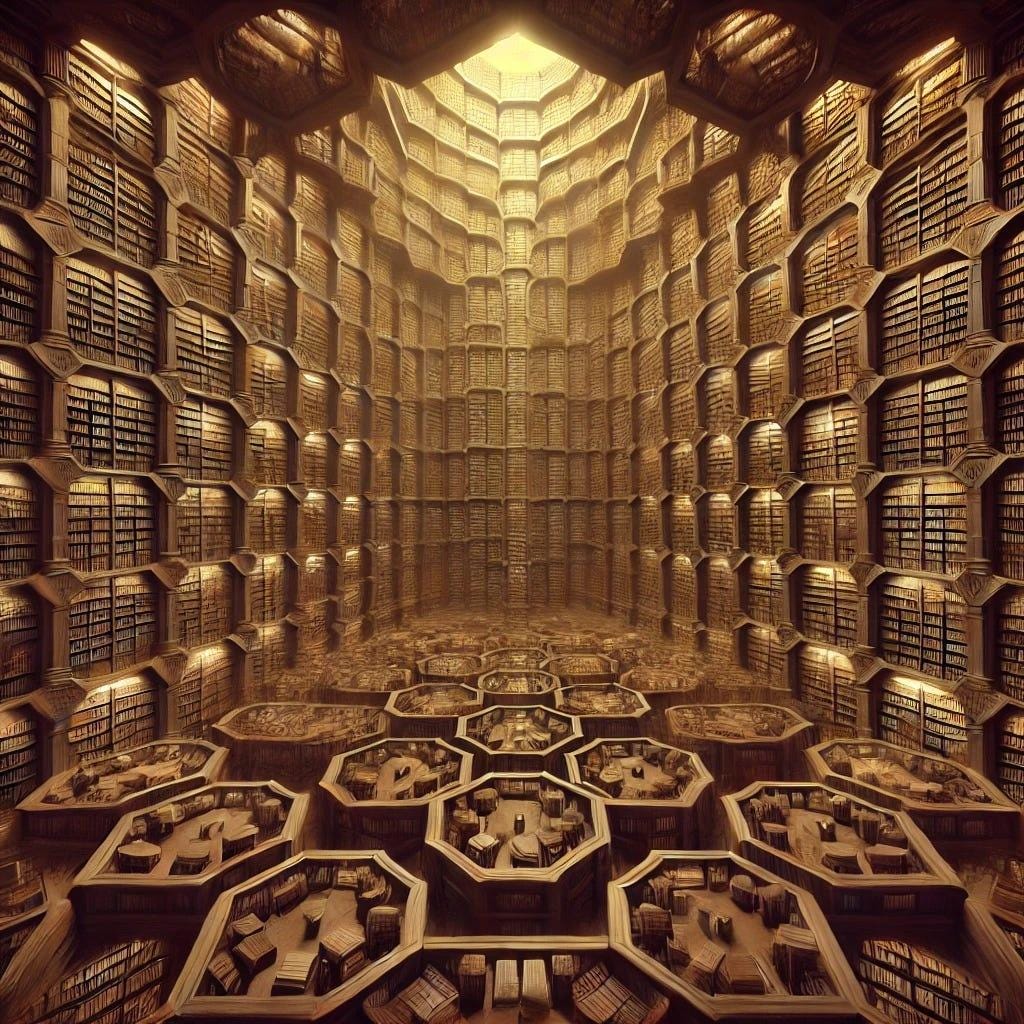
Of the three of us, I suspect I’m closest to what Glissant had in mind — not a fixed point of observation but a crossing. I came to him recently, in translation, and recognized something I had apparently already been doing. If the world is a library in the Borgesian sense, I’m rarely reading only the English text. The language shifts depending on where I’m standing, and so does what I see.
I’m still trying to figure out what moved the ground in the first place — what set any of this in motion.
We move in and out of proximity with places, with cultures, with versions of ourselves — and we don’t entirely know why. Aquinas had this whole argument about the first mover, the thing that sets everything else into motion without itself being moved. I’m not sure he was wrong. He wasn’t known for a flashy style, but that’s forgivable.
In the coming days I’ll post versions of this essay in the other languages that make up this strange family — Portuguese for the irmãos, French for the frères, Spanish for the primos. Each version will be its own thing, not a translation. For those who’ve been meaning to say something but haven’t — you know who you are — consider this your invitation.
Four doors into the same conversation.

FOOTNOTE
¹ Borges wrote “Everything and Nothing” in Spanish but titled it in English — it appears that way in El Hacedor (1960). The Argentine writing about Shakespeare chose to meet him in his own language, at least in the title. For a writer preoccupied with the self dissolving into other voices, it feels less like a quirk and more like a demonstration.
It surfaces something I’ve noticed in my own reading life. I read Sartre in English, but the title that lives in me is L’être et le néant — le néant feels more like an actual abyss than “nothingness” does. The original-language title functions as a compression, a portal. The one that survives in you — in the language you didn’t read the book in — is maybe the closest you get to catching a ripple from that first mover’s movement.
About This Series
This is the 18th installment of a discussion regarding how writers past and present have informed our respective journeys and travel lives. Included are bona fide travel writers, exploring new places with fresh eyes as we aspire to do, as well as writers native to a particular destination who help add color and deep meaning to a place we want to visit. We will also look at novelists who use the geography and people of a particular place and time to weave a tale that could only be told there and nowhere else.
All are encouraged to contribute their views and favorite authors in the comments. We are always on the lookout for literature that will inspire future travel, writing, or both.
A question for Brad Yonaka: You read landscapes for a living in a way most writers only approximate metaphorically. When you arrive somewhere new as a traveler rather than a scientist, do you find the geological instinct helps you see more — or does it sometimes get in the way of just being somewhere?
A question for Matthew David Nelson: Kapuściński believed the camera creates distance even as it appears to close it. As someone who works in both images and words, do you find the lens — literal or figurative — protects you from a place, or pulls you deeper into it?
Thank you for joining us! Follow along to read the next installment by Matthew David Nelson.

 | A guest post by
|
 | A guest post by
|
I like the pseudopod analogy. That a mass of discrete (and sometimes contradictory) inputs eventually reduce to a simple vector. Systems at all levels exhibit this. The focus that results from study at an ashram would certainly allow one to see these discrete inputs more clearly.
This made me laugh re India, "The food was a negotiation." And I must read Everything and Nothing by Borges.