
Prosperity After Certainty (I): Why Travel Has Become a Form of Literacy
On how prosperity fractured and travel learned to read systems

Approximation and Definition Creep
For most of my adult life, I’ve worked as a data analyst in one form or another. One of the first lessons that kind of training teaches—if you’re honest about it—is that we never observe reality directly. We observe approximations: models, proxies, and indicators that stand in for systems too complex to be seen whole. This is not a flaw; it is the condition of analysis itself.
The danger begins when we forget that our tools are approximations rather than truths. When indicators harden into certainty, when names remain fixed while the thing underneath them quietly changes, we lose the ability to notice drift. Over time, the label stays familiar while the substance moves elsewhere. I’ve come to think of this process as definition creep.
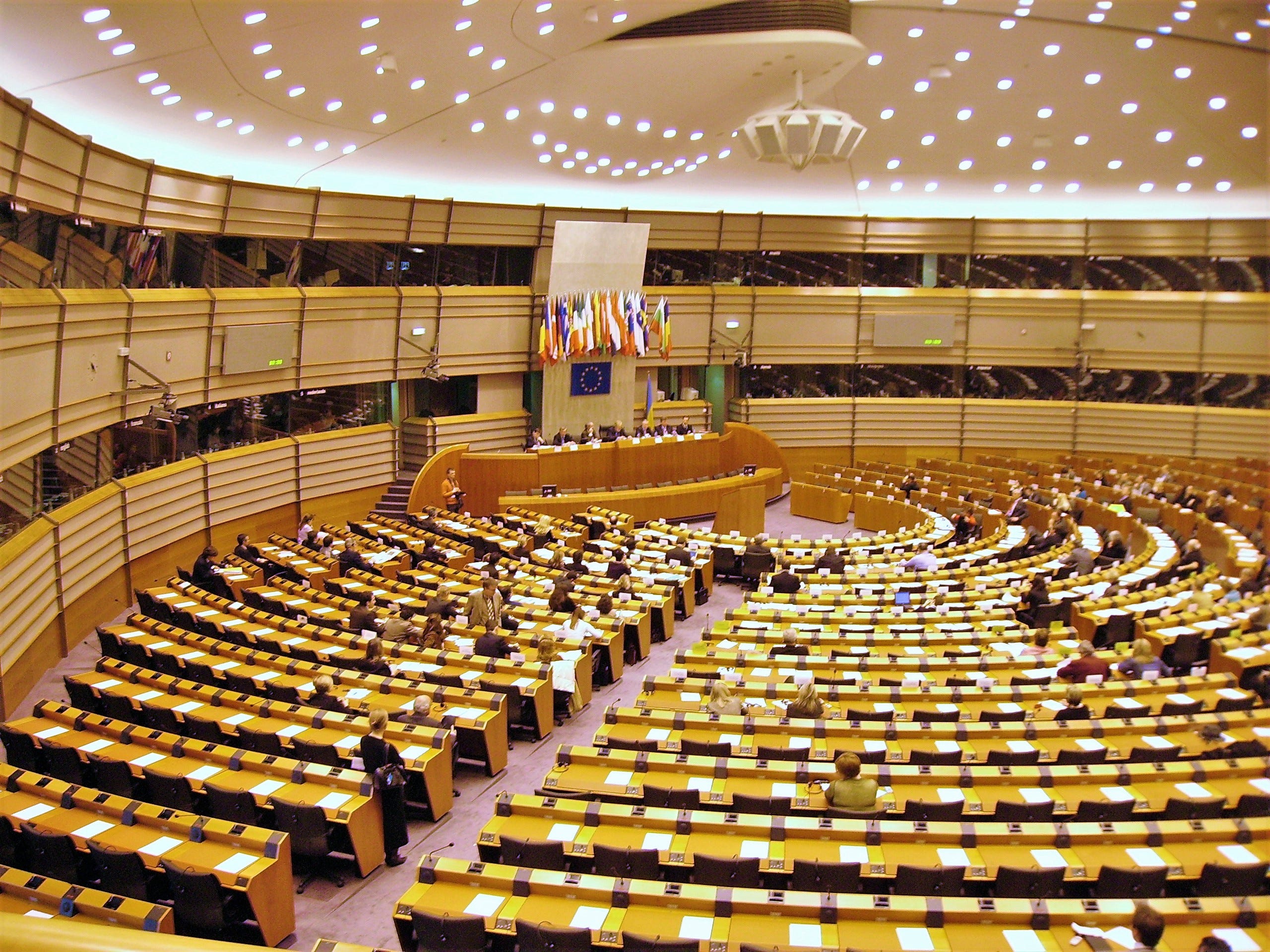
The European Union is a textbook case. What the EU meant in the early 1990s—around Maastricht—is not what it means today, despite the unchanged name. Membership expanded, demographics shifted, and internal tensions between competition, collaboration, and national identity intensified. In the early 1990s, few would have imagined Poland eclipsing the United Kingdom in certain strategic or industrial capacities. Today, many multinational firms view Poland as one of Europe’s most reliable long-term investment environments, and I work closely with Polish collaborators who operate comfortably inside that reality.
The data did not fail; the definition changed. This is why so many comparisons between Europe and the United States mislead. GDP measures total output, but it does not tell us how income is distributed, how much accrues to residents, or how economic life is actually lived. Once output is measured per person and then per adult—and once capital depreciation and cross-border income flows are accounted for—the supposed American surge largely disappears. Since 2010, Europe and the United States have grown at essentially the same pace, even as the story told about that growth diverged sharply.
Belief, Housing, and the Instrument Panel
For years, Europeans have been taught—by rankings, dashboards, and repetition—that they are falling behind an American model. That belief has mattered more than any growth differential. It has narrowed the range of imaginable choices, made dependency feel inevitable, and rendered autonomy unrealistic. Long before policy shifted, belief did.
Europe did not lose ground; it lost belief.

The consequences of that loss are most visible not in macroeconomic tables, but in daily life—particularly in housing. After World War II, housing across much of Europe was treated as a social right: a foundation for independence, mobility, family formation, and political patience. Beginning in the 1980s, that definition quietly shifted. Housing did not disappear; it was reclassified, moving from guarantee to asset and from shelter to balance sheet.
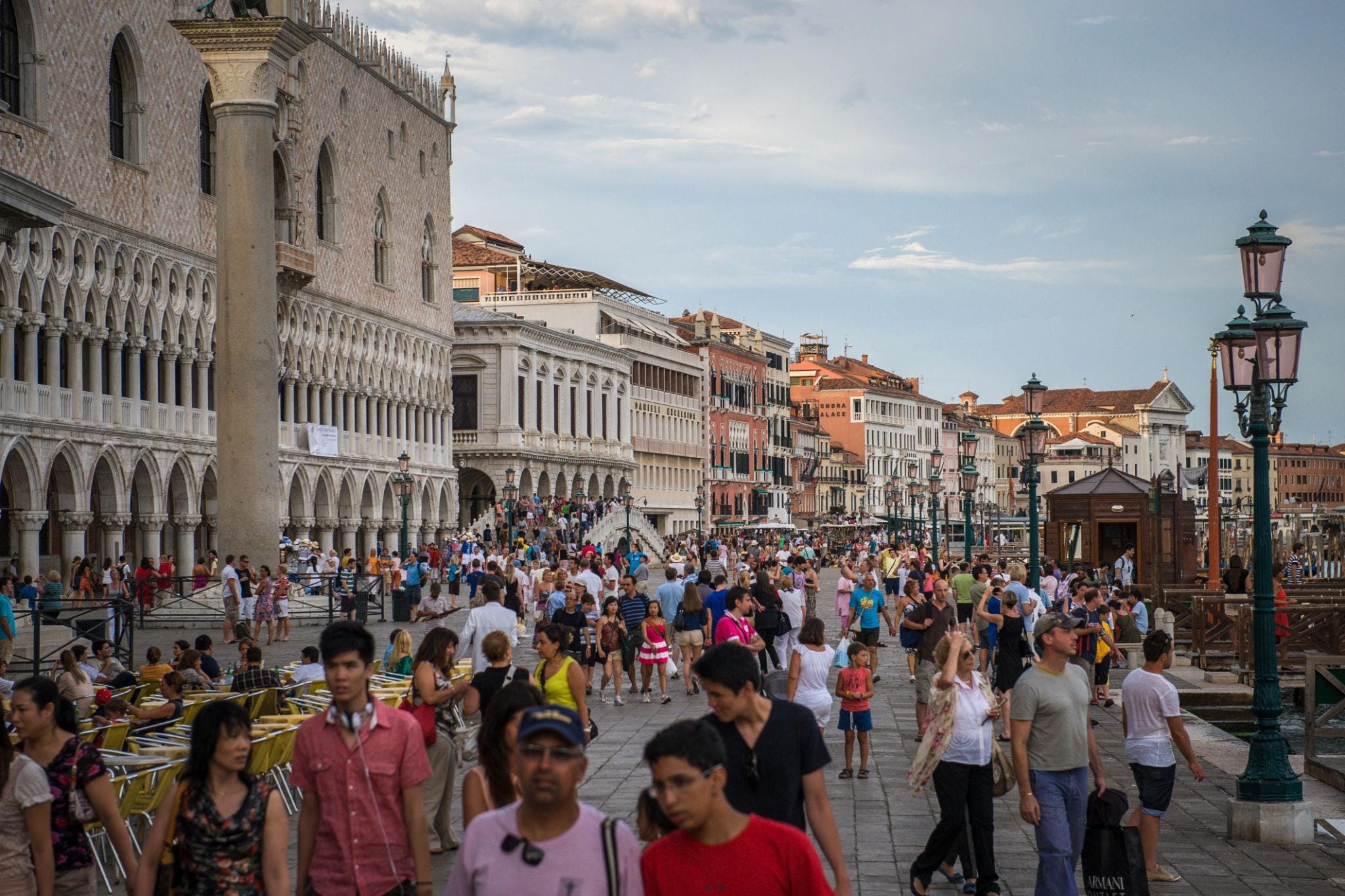
This shift was not announced as an ideological revolution. It arrived under the language of efficiency, flexibility, and modernization. But the lived results are unmistakable. In many European cities—especially highly touristic ones—young adults now spend a disproportionate share of their income on rent. Independence is delayed, mobility contracts, and family formation is postponed. Entire generations are told they live in prosperous societies while being unable to inhabit them.
Social unrest emerges here not as a cause, but as an instrument panel. It measures the distance between a social contract people were raised to expect and a market logic they were forced to inherit. One generation internalized housing as a right; the next must acquire it as a financial instrument. The unrest forms in the gap between expectation and reality.
Constraint, Adaptation, and Plural Prosperity
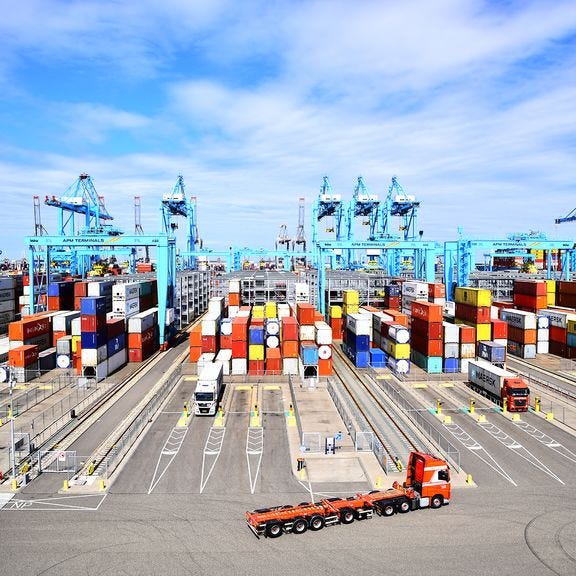
This is where Europe begins to fracture internally—not morally, but structurally. Some countries simply cannot afford ideological delay. Their prosperity, if it is to exist at all, depends on industrial footing, logistical relevance, and credibility under pressure. For them, governance becomes less about what should be true and more about what must be addressed.
Flexibility replaces purity. Speed replaces elegance. Unusual alliances replace comfortable alignments. Other parts of Europe continue to speak fluently in ideals. Their procedures remain intact and their language coherent, but their responsiveness lags. What emerges is not a hierarchy of virtue, but a hierarchy of constraint.
At this point, it becomes impossible to pretend that prosperity has a single definition. We already operate inside multiple economic systems governed by incompatible moral rules. In Islamic finance, usury is prohibited, and lending that extracts value purely from time without shared risk is considered ethically illegitimate. Yet many global lending practices rest on precisely that logic. This is not a marginal disagreement; it is a structural incompatibility.
For decades, Western metrics treated prosperity as something that could be universally measured through growth rates, debt ratios, and productivity curves. These tools were never neutral. They encoded assumptions about risk, time, ownership, and obligation that did not travel cleanly across cultures or belief systems. They functioned as long as a single financial architecture dominated global coordination.
Prosperity is no longer a destination; it is the capacity to move between incompatible definitions of success without losing coherence.
Mobility, Measurement, and Optionality

What we are witnessing is not the failure of measurement, but the exposure of its limits. One way this shift is already becoming legible is through mobility itself. Visa regimes, travel permissions, and circulation rights are no longer administrative details; they are signals of confidence and control.
We can think of this as a Mobility Optionality Index. It measures how freely a system can allow movement—of people, time, and access—without losing stability. This is not openness as ideology, but circulation as capability. New metrics will emerge—measures of resilience, legitimacy, and adaptability—but no tool will escape the fact that it remains an approximation.
Clear thinking in a period of global transition does not require abandoning measurement. It requires acknowledging the limits of tools while still using them.
Travel is no longer about seeing places; it is about reading which systems can afford to let you move.
Tourism, Travel, and Diagnostic Movement
This is where tourism and travel finally diverge in meaning. Tourism moves through stabilized definitions. It consumes brochures, rankings, and inherited narratives, and it depends on continuity and smoothness—the assumption that the world it presents is the world that still exists.
Travel does not. Travel moves through creep. It encounters the gaps between words and reality and registers where criticism is absorbed into action and where it remains suspended in debate, tolerated but unresolved, because some systems cannot afford to be wrong for very long. In this sense, travel becomes diagnostic.
Those who can recognize which world they are in before that world exacts its price will endure. Those who cannot will experience the coming years as crisis, confusion, or betrayal. Those who learn to move between systems—to recognize which rules apply, when, and at what cost—will call it navigation.
Everyone else will call it too late.
Circulation
If prosperity no longer has a single definition, travel may be the only way left to learn which system you’re actually moving through.
Everything useful and created for somebody's benefit, depers one day. Incompetent and foolish, to the point of madness, governors have altered what once seemed like a symbol of prosperity and well-being for all (the EU), replacing the failed world that was moving toward communism (which failed, incidentally, not because of a bad idea, but because of greedy governors). Certain doors are closing for tourism, but others are opening—where the governors are less crazy. After all, the world is big. There's always somewhere to go, and find what you haven't seen yet :-)