
What India Recognized
On arriving where you began

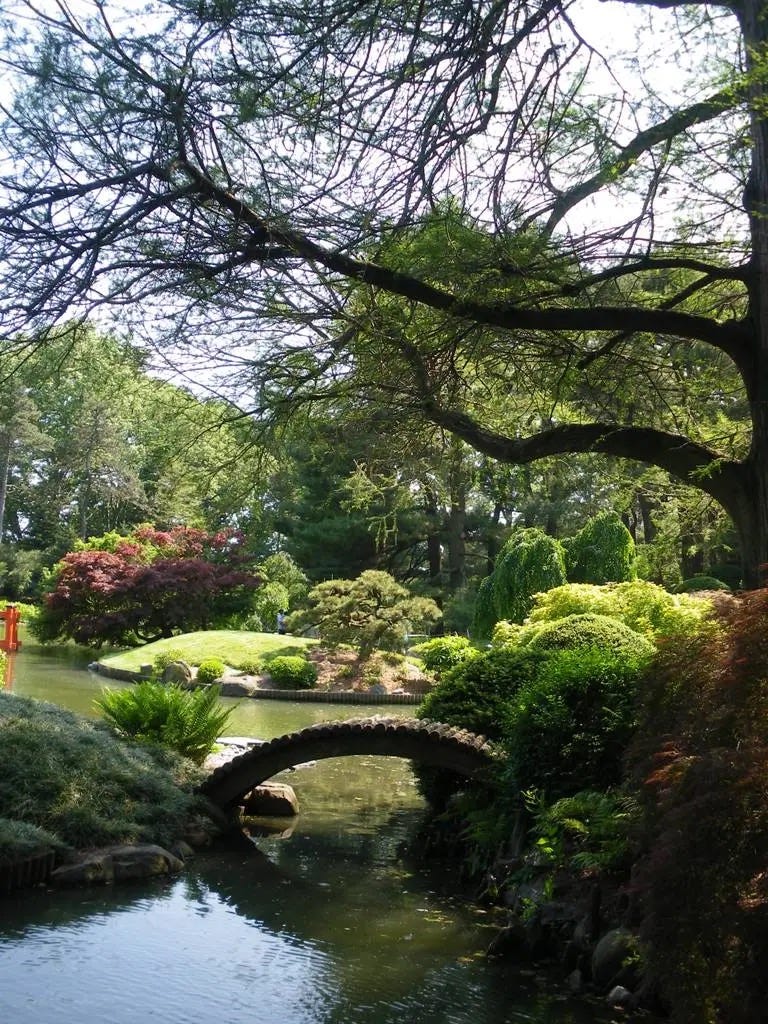
One of the perks of living near the Brooklyn Botanical Gardens was proximity to the Japanese garden — and past that, through a second gate and a separate admission, a garden within the garden. I was never surprised how quiet it got in there, how rich the scenery was, until I crossed back out into a world I was all too familiar with. There was a particular bench near the moon bridge I always ended up on, without deciding to. Bamboo doesn't rustle so much as click — a dry, wooden sound, nothing like Brooklyn's usual noise. I don't remember anyone ever having to come find me. I'd just eventually walk back out, on my own schedule, calmer than I'd gone in, the way a thing settles, not the way a thing happens. I didn't know why. I thought my first pilgrimage happened in India. Years later I understood it had actually started a few blocks from my house, one slow visit at a time.
I was weeks from turning sixteen, never having been overseas. Not once. I found myself in southern India, sitting on a stone floor in an open air ashram before the sun had fully committed to rising, light arriving with no interest in proving itself. I had no word yet for what I was feeling. Years later I'd understand it wasn't India that put it there — it was already mine, and had been for years. India was the first place loud enough, in its stillness, to make me notice it. But for fifteen years going on sixteen, it was only the unsettling conviction that something in that room was more real than the life waiting for me back home.
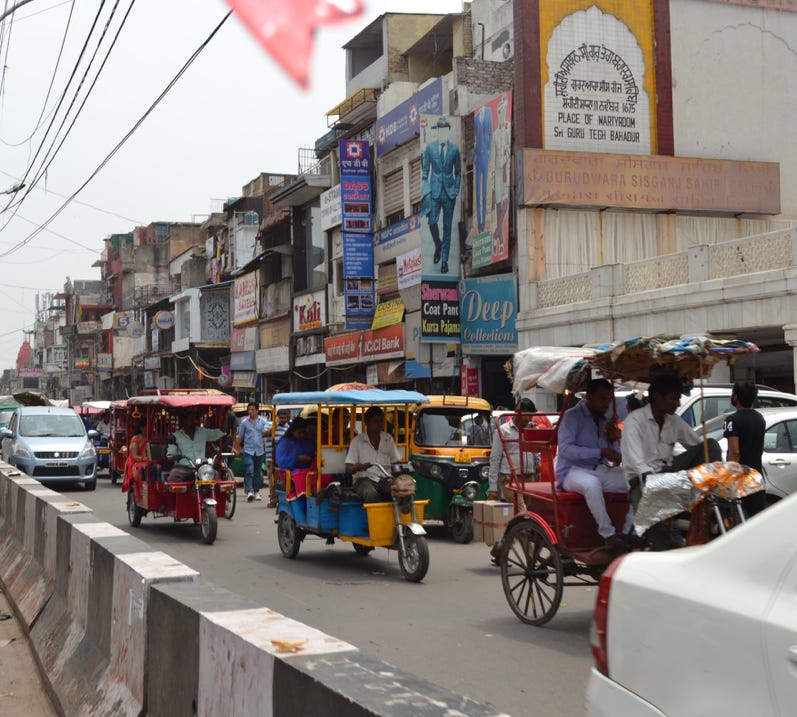
There was a rhythm to that place — washerwomen beating clothes against rock, rickshaws and cows and cars tangled into each other, crows overhead that were supposedly good luck every time one shit on you, which happened to me more than once. A city can be listened to, and if you're patient, it starts listening back.
What stayed with me longest was the monsoon — how fast it dissolved the small, unnamed community that had formed around a few weeks of shared mornings. I remember standing in it, soaked through in seconds, the outside of me and the inside of me doing the same work at the same time.
I've spent years assuming I needed another journey like that one. Until, in the quiet of an everyday room, I realized there was nowhere to go to unlock the present moment. What had been unfolding had been unfolding all along, slowly, the way most real things unfold — the way I'd once ended up on that same bench without ever deciding to.
Perhaps pilgrimage was never about distance at all. Perhaps it was always the slow discipline of letting go of control and listening closely enough for the world to answer.
India didn't give me anything new.
It revealed a capacity that had already been quietly built in me, blocks from where I slept every night — in a garden that had been demanding the same kind of attention for years, just more quietly than an ashram ever would.
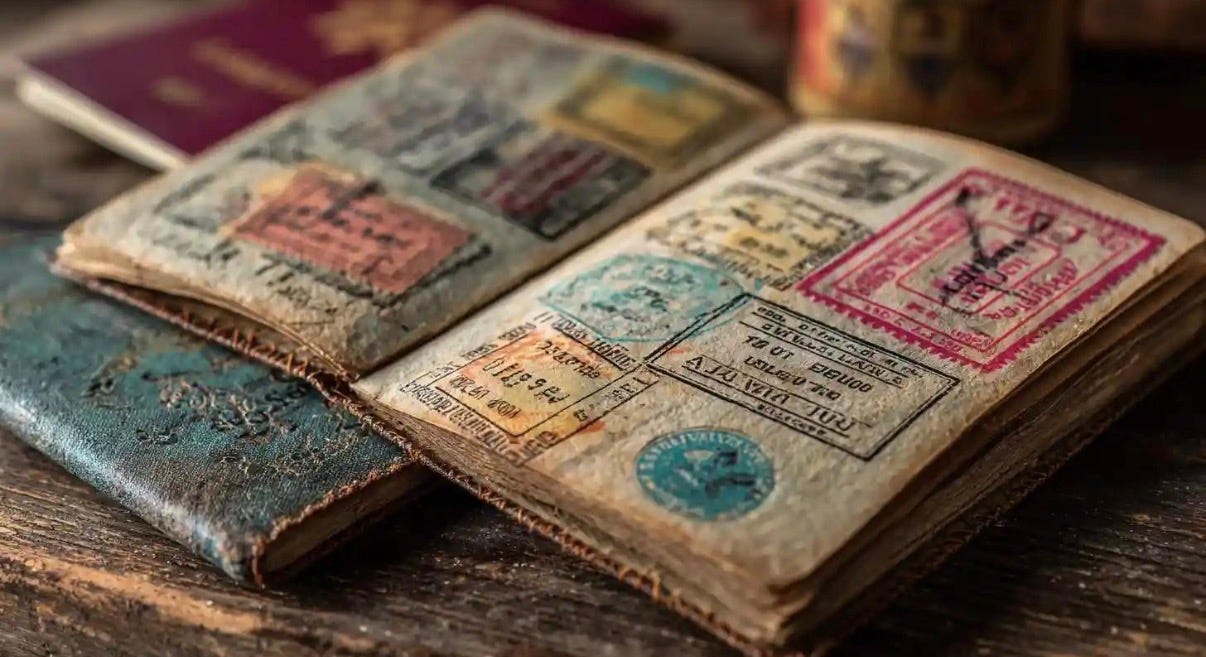
Somewhere in a drawer there's still the passport, with the Indian consulate stamp.
We often mistake pilgrimage for geography. Mine began with a bench beside a moon bridge, a few blocks from where I slept, and took most of my life to finish arriving.
Tags: Pilgrimage, Diaspora Memory, Attention, Contemplative Practice, Childhood, Recognition, Brooklyn, India
SHARE || SUBSCRIBE
If this essay found you somewhere quiet, consider passing it to someone who might need the same stillness.
And if you’d like more of this — the slower, more personal side of Marginal Pilgrims alongside the analytical work — subscribing means these pieces reach you directly, as they’re written.
That's beautiful, and more beautiful you understood when it all started.